Posts by Trey
Case Study: New Orleans Addresses Storm Water System Vulnerabilities
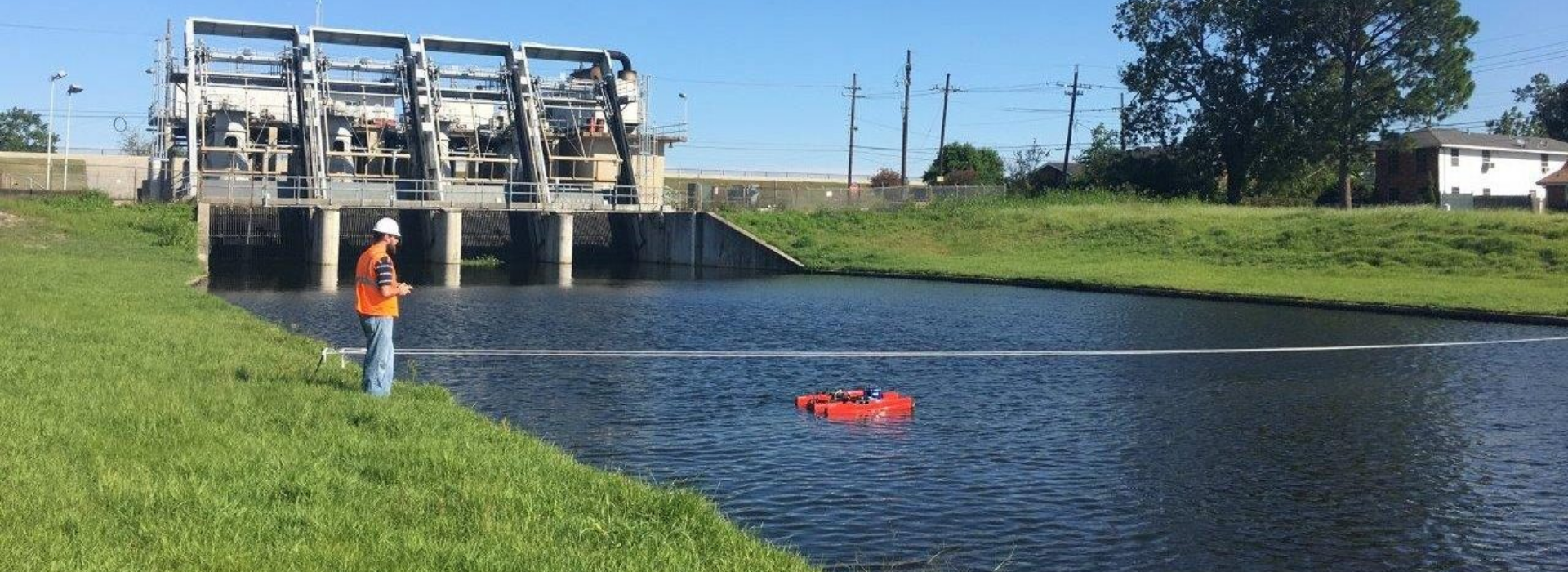
Customer As a result of its unusual topography, the city of New Orleans is prone to flooding from the Mississippi River and Lake Pontchartrain, as well as frequent inundation from high intensity rainfall. Since the late 1800s, New Orleans Sewerage and Water Board (NOSWB) has been tasked with providing the city adequate drainage, sewerage collection…
Read MoreThe True Cost of Water Loss: It’s Not Just Non-Revenue Water (NRW)

Every day, water utilities face pressure to minimize operational and capital expenses but still meet ever-increasing demand. With rate increases as rare as they are unpopular, cost remains the primary target. One big cost for most water utilities is water loss or “non-revenue water (NRW).” All water entering a distribution system is either “accounted for” consumption, or…
Read MoreThe Key to Efficient Chlorine Disinfection: pH

Many systems rely on chlorine to make sure the water is safe from biological contaminants. If you are testing chlorine in your drinking water system, the question of how much free chlorine and how much total chlorine comes up. Some terms to know: Free Chlorine – this is the form of chlorine that is most…
Read MoreCC Lynch Welcomes Danny Hutcherson as Newest Water Monitoring Expert
C.C. Lynch & Associates is proud to announce that Danny Hutcherson has joined our team. Danny has served the water and wastewater industry for 40 years. Initially, Danny will serve as our Drinking Water expert; presenting on-line techniques for monitoring water from its source, across process treatment and throughout distribution. His role will add value for…
Read MoreAn Overview of Teledyne ADCPS Water Resources
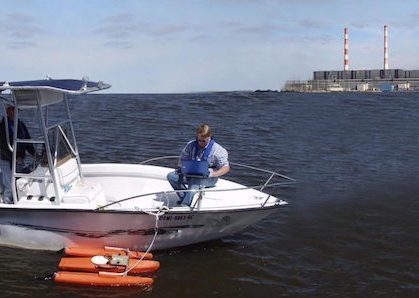
Teledyne ADCPS Water Resources can cover a variety of monitoring needs from streams and rivers to reservoirs and irrigation channels. Their monitoring devices include both fixed-mount and boat-mount configurations, capable of monitoring water velocity, stage and discharge data at depths of .12 meters to 300 meters. Teledyne RDI offers seven different products with varying specialties:…
Read MoreOpen channel flow measurement techniques

NO FLUME, NO WEIR, NO PROBLEM Arguably, the most important measurement taken in and around water/wastewater systems is flow. In open channel applications, the most common flow measurement technique is through Primary/Secondary devices. Primary devices include flumes and weirs that create a reliable relationship between water level and flow rate; in the form of a…
Read MoreTop FAQs on Third Party Flow Meter Calibration

What is third party flow meter calibration? Third party flow meter calibration is when a recognized independent service company tests and adjusts your flow meter(s) for optimum performance, following the manufacturer’s recommended procedure. Why do I need third party flow meter calibration? There are several reasons third party calibration is recommended, including: Most permits require…
Read More3 Reasons to Rent Water Monitoring Equipment from the Manufacturer
Editor’s note: This article originally appeared on the In-Situ blog in May 2015. There are several reasons you might consider renting environmental sampling equipment: maybe it just makes more sense to rent equipment for a project rather than buy it, or perhaps you want to try the product before you make the commitment. Whatever the…
Read MoreCase Study:Texas Municipality Diverts Flow in Large Diameter Sewer Lines
By: Brandon Dalton Customer In the past few years, there have been several sewer line rehabilitation projects in Texas involving large diameter sewers (6 feet to 11 feet diameter) located 50 feet to 60 feet below ground. These projects have either required the city to block flows in order to divert to other sewer lines…
Read More6 Benefits of Clamp-On Ultrasonic Flow Meters
According to the American Water Works Association, public water systems lose approximately $2.8 billion in annual revenue from water loss. Non-Revenue Water (NRW), combined with the environmental impact, has drinking water specialists looking for more flexible and accurate flow measurement technologies to locate, and quantify, sources of loss. The Transit Time Ultrasonic technique provides a…
Read MoreNot all pH Electrodes are the Same
If there is one thing our industry has no shortage of, its pH electrodes. There are several manufacturers all pushing their electrode as ‘compatible’; no matter which meter you happen to be using. While ‘compatible’ might hold true, electrodes are not as homogenous as some might lead you to believe. Across the breadth of pH…
Read MoreEngineered Composite Stop Logs
Stop logs are in commonly used in water and wastewater treatment plants, lagoon control, flood control, and flow diversion. Historically, most stop logs are constructed of wood or metal. However, vacuum infused Fiberglass Reinforced Polyester (FRP) design is proving to be a much better solution for stop log design. Wood swells as it takes on…
Read MoreTough Challenges in Sewer Lift Station Level Measurement
Tough challenges for sewer lift station level measurement are operating in an extremely harsh environment; and reliable performance without frequent maintenance. Pump controls are dependent on accurate level sensing; so the level sensor must be designed to withstand these conditions; without the need for constant maintenance and calibration.
Read MoreBattery Maintenance for Solar Panel Systems
Battery maintenance for solar panel systems is an easy way to maintain reliable service and extend equipment lifespan. Solar panel power arrangements are practically maintenance free…practically. We recommend an inspection routine at least annually – to help intercept problems before they happen and prolong the life of the battery.
Read MoreSolar Panel Batteries and Temperature
In our October blog, we suggested that you err on the side of larger when sizing solar panels and batteries. One reason is that solar panel batteries are greatly affected by temperature; and only one part of this story is good.
Read MoreGravity Flow Measurement in Smaller Pipes – Application Toolkit Part 2
ISCO Flow Metering Inserts Gravity flow measurement in smaller pipes (6 – 12 inches) can present challenges; from access, to technique and cost. With everything below grade, access tends to be the final manhole; out near the site’s perimeter. In these cases, ISCO’s Flow Metering Inserts can play an important role in our Application Toolkit.…
Read MoreSolution for Excessive Approach Velocity In Flumes
Accurate flow rate measurement is highly dependent upon the approaching flow conditions. The approaching flow should be well distributed, laminar, and free of surface waves. To aid in the transition of flow from what is typically a wider approach channel into the flume, the use of curved wingwalls or flared transitions should be used to…
Read MoreReal Time Water Quality Monitoring on Rivers
Long term water quality monitoring on rivers can be an arduous chore; and very expensive. The cost of sending teammates into the field continues to skyrocket, especially when it is over water; not to mention the inherent safety concerns. All this for what amounts to a ‘snap-shot’ of water quality at the time of measurement…
Read MoreParshall Flumes – Free vs. Submerged Flow
As often as we use Parshall flumes for open channel flow measurement, it is important to understand “free versus submerged flow” conditions; as it greatly impacts the accuracy of the installation…or the lack thereof. While any primary device could be affected by submerged flow conditions, there isn’t much data to be found on the topic.…
Read MoreThe Thelmar Weir – Insertable Volumetric Weir for Flow Measurement in Pipes
Thelmar Insertable Volumetric Weirs are commonly used for temporary flow measurement in a pipe, or manhole; with relatively low flows. The Thelmar weir is calibrated compound weir that is inserted into the invert of a pipe and incorporates a 90° v-notch for measuring lower end of the range; then opens into a rectangular weir at…
Read More